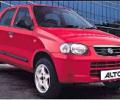
Japanese carmaker Suzuki Motor Corp is recalling the automatic transmission version of its compact car 'Alto' in Europe, which is sold under the brand A-Star in India.
Japanese carmaker Suzuki Motor Corp is recalling the automatic transmission version of its compact car 'Alto' in Europe, which is sold under the brand A-Star in India.

The country's largest car maker Maruri Suzuki India on Friday said it has cut down production on most of its models this month due to slowdown in the market.
Stingray, which is powered by a 998 cc petrol engine, is available in three variants, with price ranging between Rs 4,10,000 to Rs 4,67,000.

The Baleno cars covered in the recall include 17,231 export units.
Workers across Suzuki Motor Corporation's three subsidiaries in the country are standing firm on their decision to continue an indefinite sit-in strike at the company's Manesar facility.
If the 'connecting rod bolt' is found defective, the company will replace the component free of cost.
The Maruti Udyog board has approved the purchase of Suzuki Motor Corporation's shares in their joint venture Maruti Suzuki Automobile India Ltd for Rs 12 crore (Rs 120 million) and merge the arm with itself, the Lok Sabha was told on Thursday.
Sources close to Maruti management said the company has agreed to reinstate the 11 workers whose services were terminated for instigating the strike.

The government is working on a recall policy.
The previous best selling year was 2010 when Maruti managed to sell around 10.6 lakh (1.06 million) units.

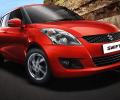
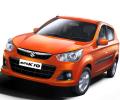
Alto, the Maruti brand synonymous with small cars, introduced the new generation K10 on Thursday, aiming to consolidate its position further amid shrinking demand for hatchbacks. With prices starting at Rs 399,000 and going up to Rs 533,500 (for manual transmission), the new model claims fuel efficiency of 24.90 km per litre. The Japanese car maker, which has been selling 100 Altos every hour for the last 22 years, had discontinued the model in February 2020.

Maruti Suzuki Celerio will now come equipped with ABS and airbags for all its variants.

The country's largest car maker Maruti Suzuki India (MSI) on Friday said it is recalling 1,81,754 units of petrol trims of various models, including Ciaz, Vitara Brezza and XL6, to replace faulty motor generator unit. This is the company's largest vehicle recall till date. As a responsible corporate, keeping in mind customer safety, the company has announced to proactively undertake a recall of some petrol variants of Ciaz, Ertiga, Vitara Brezza, S-Cross and XL6, MSI said in a regulatory filing.

The country's largest carmaker Maruti Suzuki on Tuesday said it plans to have an output of 15 lakh (1.5 million) units by 2015 to maintain its 50 per cent market share in the Indian car market.
The company, whose arm Maruti Suzuki is the largest passenger vehicles maker in India, asserted that it does not align with any political or religious inclination in any part of the world.
Multiple tailwinds for the automobile sector, including a cut in goods and services tax (GST) rates, are keeping analysts bullish on auto stocks from a long-term perspective, even as they see the rally running its course in the near term.

Japan is expected to increase its investment target in India from the earlier 5 trillion yen ($34 billion) to almost 10 trillion yen.
With 15 models and a market share of close to 50 per cent, it rules the Indian market, selling almost 1.5 million units every year, rolling out one model every ten seconds.
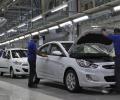
Leading automakers Maruti Suzuki, Hyundai and Tata Motors on Friday reported robust sales for February as demand for sports utility vehicles continued to remain strong. Mahindra & Mahindra, Toyota Kirloskar Motor and Honda Cars also witnessed higher vehicle dispatches to dealers last month. February turned out to be the third-best month for sales for the industry ever.

Toyota Kirloskar Motor (TKM) has reported a consolidated net profit of Rs 4,787 crore for 2023-24 (FY24) - more than three times the earnings recorded the previous year. This growth can be attributed to robust demand for its vehicles, particularly hybrid models and cross-badged cars from the Toyota-Suzuki alliance.
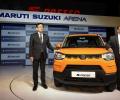
The country's largest carmaker Maruti Suzuki India will not "walk away" and fight to get back to 50 per cent market share in the domestic passenger vehicle segment, according to company Chairman R C Bhargava. The auto major, which is commemorating 40 years of operations, has seen its market share drop to 43.38 per cent in FY22 from a peak of 51.21 per cent in FY19. In order to get back its dominant leadership, the company plans to drive in models catering to both urban and smaller cities and rural areas.
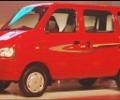
The country's largest passenger car manufacturer Maruti Suzuki India Ltd is planning to hike prices on rise in input costs.The company last raised prices in January 2009.
The Hayabusa from the Suzuki stable is an insane machine. But that is not the only motorcycle that the Japanese automaker produces. There are so many more, so let's take a quick journey through the iconic bikes made by Suzuki.
The country's largest car maker Maruti Suzuki India's 'completely made in India car' will hit the roads by 2012 and the company is likely to finalise the design within the next six months.

Supporting the all India strike called by 11 trade unions, Suzuki Motorcycle India Employee Union President Anil Kumar said: "As many as 27 workers unions of different factories in the Gurgaon, Manesar, Dharuhera and up to Bawal have agreed to go on strike for a day. So, there will be no production at our plant tomorrow."
With 25 per cent sales growth in the multi-utility vehicle segment, other car makers rushing in, too.
Two in every five Celerios being sold by Maruti are now equipped with the AMT technology.

Maruti's 7 models in India's top ten selling passenger vehicles in 2016-17

It may not have a bold design but it addresses the needs for comfortable and affordable commuting.
The auto major likely to start work for phase one of its Gujarat project within next three months.

The company would decide on increasing the capacity and investment needed for the same in presence of its parent Suzuki Motor's chairman Osamu Suzuki

Stock market sentiment is likely to remain optimistic going ahead, though some consolidation cannot be ruled out after the recent sharp rally in the benchmarks, analysts said. According to experts, the Nifty and Sensex could indeed move towards new record highs before the end of the year, if global cues stay supportive, crude oil prices remain benign and there is continued domestic earnings momentum.

The country's largest carmaker Maruti Suzuki India is neither shifting investments nor jobs from Haryana to Gujarat by shifting production of its compact sedan Dzire, company chairman RC Bhargava said on Tuesday. The company is maximising the efficiency of production at its two plants at Haryana and the parent Suzuki's Gujarat plant, keeping in mind the demand of its multiple models.
The proxy advisory firm's latest comments come within days of Maruti saying that it expects to save about Rs 10,500 crore (Rs 105 billion) in the first 15 years by not investing in the Gujarat facility.

Developed at an investment of Rs 620 crore (Rs 6.2 billion), the most on a car by Maruti Suzuki, the Ciaz will also be exported to West Asia, Europe, Africa and Latin America.
Analysts say in spite of its recent recall of 100,000 Swift, Ertiga and Dzire cars, Maruti's outlook remains stable.
Workers want a union, while Maruti wants a 'Good Conduct Bond.' Both refuse to give in to each other. The real issue, however, is something else.

Indian passenger vehicles market registered record wholesales of 43 lakh units in 2024, with companies like market leader Maruti Suzuki, Hyundai, Tata Motors, Toyota Kirloskar Motor, and Kia posting their best-ever annual domestic sales. The continued growth of SUVs, along with rural markets playing a key role in driving up car sales, helped the industry better the previous best of nearly 41.1 lakh units posted in 2023.

The company added that the employees have offered to donate a day's salary for the cause.
